Caroline Cornish and Christina Hourigan
Introduction: Tree Cultures and the Arboreal Humanities
PLANT PERSPECTIVES 2/2 - 2025: 275–284
doi:10.3197/whppp.63876246815900
Open Access CC BY 4.0 © The Author
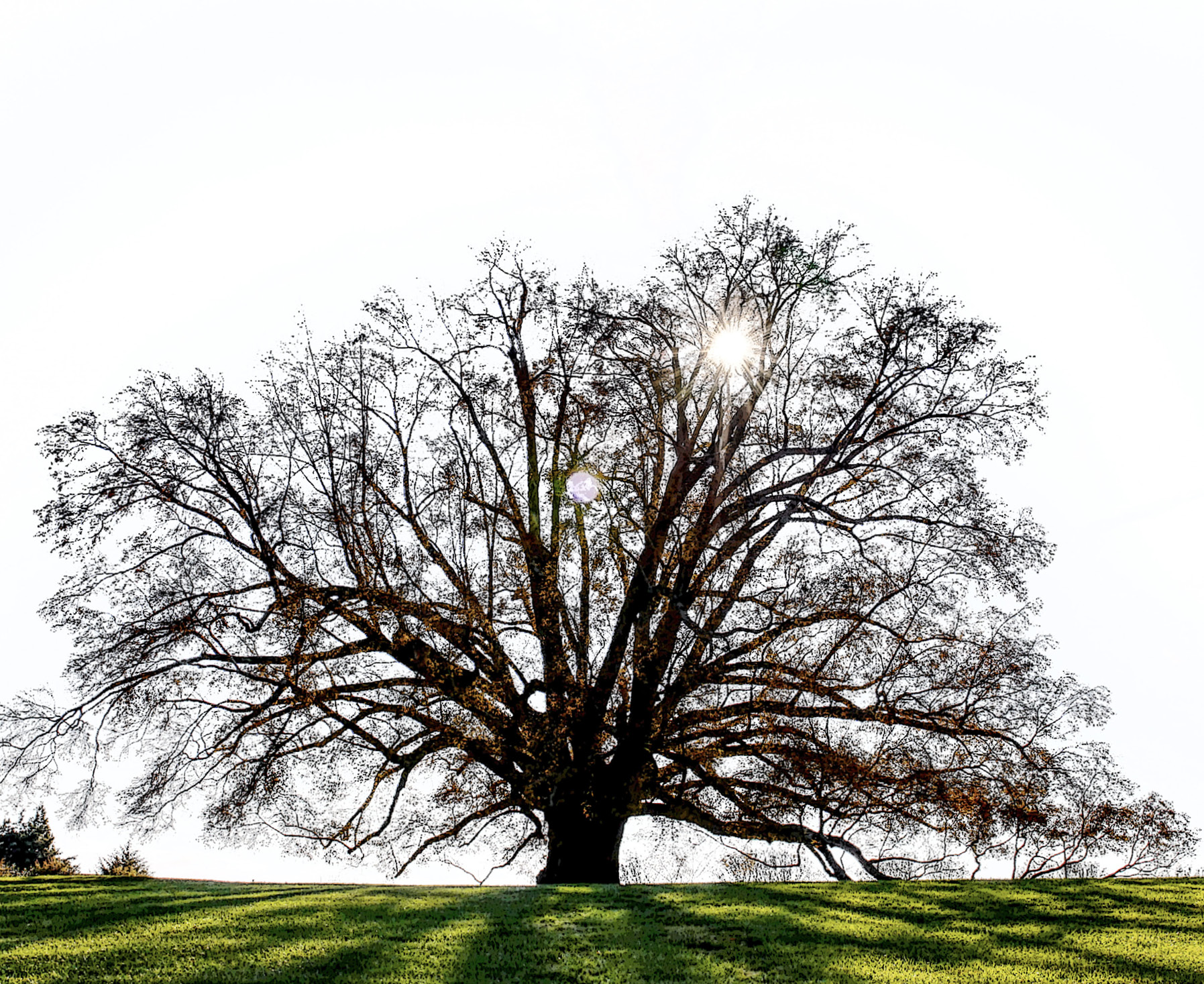
 The trees encountered on a country stroll
Reveal a lot about a country’s soul.
…
A culture is no better than its woods.
(W.H. Auden, ‘Woods’, Bucolics II, 1952–53)
More than any other type of plant, trees ‘speak’ to humans in fundamental and deeply emotional ways. The outrage sparked in Britain alone in recent times by the felling of the Sycamore Gap tree on Hadrian’s Wall; an ancient oak near a London car park in Enfield; over 100 trees on Plymouth’s Armada Way; and the proposed destruction of locally significant trees such as the Darwin Oak in Shropshire, are just some recent examples of the extent and depth of human-arboreal relations. The reasons for these relations and how trees can act as emblems of wider issues with ‘their aesthetic beauty and their shadowy meaningfulness’, can be complex.1 The agency of trees – their ability to react to both elemental and cultural stimuli; their ability to resist natural and human interventions; and the role they play in the making of place and memory – renders them ‘figureheads for cultur[al study]’.2 Their longevity, seasonal variation and ‘rich materiality’ offer us ways to connect to places we have known and experiences we have undergone.3 In such ways, trees inhabit our many literatures, folklores, languages, philosophies, religions, arts and histories, and act as current and historic markers within landscapes. As biocultural actors that bridge the nature–culture divide, trees also offer fertile ground for the interdisciplinary researcher.
In 2002, Owain Jones and Paul Cloke published Tree Cultures: The Place of Trees and Trees in Their Place, and sought to consolidate and expand recent thinking on the entangled lives of people and trees, and how nature–society relations were integral to understandings of place.4 This seminal work explored the complex relationship between places as makers of trees and trees as makers of places.5 Alongside important studies into the cultural history of woods and forests and other arboreal landscapes by Charles Watkins,6 Paul Elliott7 and Stephen Daniels;8 others including Tim Edensor on heritage entanglements;9 and Dalia Nassar and Margaret Barbour on the embodied histories of trees,10 for example, and sitting together with the vast literature on landscape studies, and plant and environmental histories, a new branch of environmental studies has grown – that of the ‘arboreal humanities’. Eco-cultural thinking can allow us to appreciate the many connections across the biological and cultural worlds in which trees exist, just as recent papers in this journal attest.11 The emergent area of arboreal humanities sits within the plant humanities – a field of research identified by Felix Driver, Caroline Cornish and Mark Nesbitt in their landmark report as ‘an inherently interdisciplinary project, where arts and humanities researchers are often in dialogue with different ways of conceiving the relations between people and plants’.12 In this issue we make the case for trees as a special category within the plant humanities.
The history of this special ‘Tree Cultures’ issue of Plant Perspectives can be traced back to September 2023 when we, as historical geographers with interests in the historical geographies of trees, convened a panel – ‘Tree Stories: Trees and the making and unmaking of place’ – at the annual conference of the Royal Geographical Society, London. Our aim was to form an interdisciplinary network of those interested in the cultural histories and geographies of trees. Articles in this issue by Heather Craddock, Melanie Ford and Christina Hourigan are based on papers presented at that conference. Our network quickly gathered interest and, as we had been unable to accept all the papers submitted for the RGS event, in February 2024 we collaborated with the Linnean Society of London to present the symposium ‘Tree Cultures: Words, Woods and Well-Being’. Here, a full house and a plethora of good papers again proved to us that this was an area of new and significant interdisciplinary interest. The articles by Amanda Davis, Kate Teltscher and Maria Kennedy published here, were first given a public hearing at this event. The network took on its own momentum when, following this, two of our former speakers, literary scholars from the University of Derby, Amanda Davis and Anna Burton, were awarded funding for a further event which we held at the Royal Botanic Gardens, Kew in July that year. ‘Tree Cultures @Kew’ enrolled Shani Cadwallender into our network, and you can find her poem and commentary on Eliza Cook and the ‘Slaugham Yew’ in this issue. We would like to thank everyone who presented thought-provoking papers at these events.
Arboreal poetics – both poetry writing and writing on poetry – form a key component in this issue, in work by Amanda Davies, and poets Shani Cadwallender and Dean Brink. Davies explores the shared arboreal poetics of place in the work of the first- and second-generation Romantic poets, William Wordsworth and Percy Bysshe Shelley respectively. Whilst Wordsworth is widely acknowledged as ‘the poet of nature’, as Davies demonstrates, trees for Shelley equally ‘branch’ throughout his many forms of composition, from the hundreds of tree drawings in his manuscript notebooks, to trees as rhetorical figures in his poems and letters. Trees and the making of place represent a leitmotiv in Shelley’s tree-writing, beginning in his early work in which place is shaped by arboreal, interspecies interconnections – or ‘net-work’ making – in biodiverse woodlands.13 Indeed, Davies reminds us that the very root of the word ‘poetry’ – the Greek poiesis – means ‘making’; and she traces a thread through the work of both Wordsworth and his erstwhile disciple, Shelley, linking trees fundamentally to the making of place. Citing Ryan,14 Davies argues that human becoming is enhanced in the work of the two poets through their ability to harmonise with the poiesis of trees, otherwise understood as their ‘dynamic transformation’ over time and place.
Cadwallender on the other hand, in her poem and preambulatory commentary, turns her gaze towards the lesser known, ‘relatively obscure’ female poets of the nineteenth century. Foregrounding Eliza Cook, whose arboreal interests, like Wordsworth and Shelley before her, are both temporally and spatially situated in the era of the Anthropocene, is similarly moved by reflecting on trees as a means of reassessing the relationship between humans and non-humans. Cook’s poetry echoes that of Wordsworth and Shelley in her praise of the beauty of trees, and of trees as anti-materialist forms of value; employed for their symbolic associations; and used as analogies for human relationships. And the ancient yew tree (Taxus baccata) which connects her poesis to that of Cadwallender is informed by earlier poems by Wordsworth and Tennyson; however, in other aspects – of gender, sexuality, class, time and politics – Cook’s perspective is markedly different to that of the Romantics. Cadwallender’s own poetic response to Cook’s writing on the ‘Slaugham Yew’ is informed by shared experiences of illness and only made possible by the survival of both tree and Cook’s text, emphasising the importance of tree longevity in processes of tree–human harmonisation.
Like Cadwallender’s yew tree, in Dean Brink’s poem, ‘The Tree You Want’, trees are storehouses of cultural memory, witnesses to, and agents in manifold human and non-human lives. Brink addresses the affordances of trees encountered in settings punctuating various stages of his life, affordances which, however, can only be enjoyed through an act of multi-species perception the poet describes as ‘trying to feel what a tree feels tree-wise’. That perspective requires the decentring of the Anthropos in favour of ‘tree-agential communing.’ Rather than tree biography, Brink’s poem then, can be understood as an experiential autobiography – a ‘tree-centred worlding’ told through his encounters with trees in the Pacific Northwest, Taiwan and Japan.
Brink’s trees are not understood as individuals with their own life histories, whereas the yew loved by both Cook and Cadwallender is unique by virtue of its history which connects two poets writing generations apart. It exists in the lives of both women as a cultural object. As Christina Hourigan argues in her essay, and recalling Chris Gosden and Yvonne Marshall’s theorisation on object biographies, trees change over the course of their existence in response to natural and cultural stimuli, accumulating histories as they do so, such that a tree’s present significance ‘derives from the persons and events to which it is connected’.15 By exploring the approach of ‘tree biographies’ Hourigan aims to ‘unlock fresh perspectives on trees as embodiments of cultural memory, allowing a deeper interrogation of them as sites of meaning’. This of course, also implies a form of agency on the part of the tree itself, allowing it to become a leading actor in the making of place. Her case study of a deodar cedar (Cedrus deodara) in the arboretum landscape at the Royal Botanic Gardens, Kew, demonstrates how botanical institutions like Kew, which hold linked collections of living plants, archives, publications, preserved specimens and cultural objects, are uniquely placed to enable explorations of the life, values and contexts of individual trees – notably, in this example, of the imperial context in which the deodar was mobilised from British India to southwest London.
Melanie Ford, too, reconstructs the biographies of a select group of trees in her article, ‘Where on Earth are the Moon Trees?’ Ford’s trees, planted from seeds taken to the Moon on the Apollo 14 mission in 1971, demonstrated resistance to the extreme conditions they experienced in space by taking root and flourishing when once returned to Earth. This agency enabled their adoption as symbols of American identity when, as seedlings, they were replanted in various towns as part of the 1976 American Bicentennial celebrations. However, Ford charts a trajectory of dynamic transformation for the trees as cultural objects. The trees lived on in public spaces, sometimes in a state of anonymity, sometimes becoming symbols of local identity, until their ‘rediscovery’ twenty years later when efforts were made to locate and map them in their entirety, and in some cases to save them from destruction. Ford’s account shows how the Moon Trees function at a number of levels, not only as national symbols and local place-makers, but as repositories of personal and communal memory.
Tree agency takes on the form of resistance in two of the research articles in this ‘Tree Cultures’ special edition. In Heather Craddock’s account of the ackee tree (Blighia sapida) translocated from West Africa to Jamaica on the bodies of enslaved Africans, the tree represents the resistance of those Africans and their Jamaican descendants to the plants favoured by colonial botanists and planters. But ackee’s own agency is also defined by resistance: to the colonialists whose lack of knowledge rendered it potentially lethal; to the planters on whose land ackee flourished in slaves’ provision grounds; to the metropolitan botanists whose ignorance of ackee led to ‘archival absences’ in Kew’s records. Resistance, too, in the residual ackee trees which survive in new contexts: in botanic gardens and on university campuses, thus acting as sites of cultural memory, and imbuing ackee with primacy as a botanical symbol of Jamaica.
Plant resistance also permeates Maria Kennedy’s account of ‘feral’ apples in America. The return to the wild of once-cultivated apple trees and their subsequent discovery, care, use and propagation by people in reforested areas of the American Northeast has been recognised as a process of ‘un-cultivation’. As Kennedy explains, the apple trees’ agency is best understood in terms of this wildness: ‘they are wild in terms of their genetic evolution beyond the thousands of cloned cultivars that have been selected by humans over the centuries’. While such apples offer an attractive marketing opportunity to some cider makers, they offer another, more fundamental advantage to the environment: they are a means of increasing genetic diversity in Malus species, potentially affording some defence against particular pests and pathogens, and bolstering food security for those beings, including humans, who feed off them. But Kennedy’s wild apples are also cultural objects; they partake of a long-established yet paradoxical American attitude towards landscape and identity, which can be traced to American Romanticism: humans profitably transform landscape through agriculture whilst at the same time yearning for an unknown pre-human era of ecological purity.
Kate Teltscher’s essay offers a cultural history of the thawka-gyi or Amherstia nobilis and its poesis from sacred Buddhist symbol to British ‘hothouse showpiece’ over the course of the nineteenth century. Her account decentres the ‘great’ botanist, Nathaniel Wallich, to consider the collective which mobilised the Amherstia from Burmese monastery gardens to British glasshouses including the Indians who helped collect and depict it, thus making it known to Europeans; the women who inspired its name; and the woman who first brought it to flower in Britain. Teltscher argues that the reception of Amherstia in Britain was not an act of cultural erasure, an accusation often levelled at plant translocations to Europe. Rather, its sacred status to Buddhists and its rarity imbued it with an exotic allure. Amherstia made reputations and shaped careers in Britain; it memorialised horticulturalist Louisa Lawrence under whose care it first flowered and who wisely bequeathed it to Kew Gardens from whence it was distributed around the world; and it was the material inspiration for Marianne North to voyage to ‘the tropics’ and become an acknowledged painter of natural history. Amherstia was first sighted by Wallich on a survey of Burmese teak forests and its story acts in stark contrast to that of the teak trees sought after and felled for their timber. Rather, it was, as Teltscher recounts, celebrated for its ornamentality, indeed, for its very uselessness. Rather than manage the Burmese teak forests sustainably, the British had largely exhausted them by the 1870s.
Amanda Burton’s essay, ‘Beatrix Potter and the “timber question”: Arboreal stewardship in the English Lake District’ transports us to rural England in the inter-war period (1918–1939) by which time, partly as a result of extractive practices at home and abroad, and particularly because of the demand for timber during World War I, Britain’s timber supplies were severely threatened. The Forestry Commission had been formed in 1919 to combat this, and Burton observes that Potter’s personal correspondence and fictional writing at this time demonstrate not only the importance of trees as memorials and in the making of the Lake District landscape but also a more modern emphasis on good stewardship of the land and best arboricultural practice. She was both sentimental and practical, aesthete and landowner, environmentalist and arboriculturist.
We hope this anthology of research papers, poems and reflections will enable readers to see the affordances of trees understood as cultural actors and to understand tree cultures as a means of developing their own work. Focusing on trees and their embedded cultural histories allows fresh perspectives to be explored and deeper understandings of the contributions of trees to human cultures and landscapes.
ACKNOWLEDGEMENTS
We would like to thank the editors of Plant Perspectives for inviting us to produce this special issue and for their help at every stage of the process. We wish to acknowledge the referees who have given freely of their time and expertise to offer constructive criticism to us and our contributors. And we are indebted to the Royal Geographical Society (and the Historical Geography Research Group which sponsored our panel), the Linnean Society of London and the Royal Botanic Gardens, Kew (with additional support from the University of Derby) for hosting the events which brought this arboreal humanities network together.
Caroline Cornish is an historical geographer with interests in the history of landscapes, empires, science and collections. She has published extensively on the history of economic botany at the Royal Botanic Gardens, Kew where she is Humanities Research Coordinator. She was senior researcher on the ‘Mobile Museum’ research project (AHRC 2017–19) which configured Kew and its museum as a ‘centre of circulation’. She was also a co-author of the report Plant Humanities: Where Arts, Humanities & Plants Meet (2022) funded by an AHRC ‘Where next?’ award, which scoped out the plant humanities as a disciplinary space meriting further research investment. Dr Cornish has also become a champion for greater diversity in the researching and writing of history, and in 2024 was awarded the President’s Medal by the Society for the History of Natural History (SHNH) for contributions to promoting accessibility, inclusivity, and diversity in the study of natural history.
Email: C.Cornish@kew.org
Christina Hourigan is an AHRC techne-funded CDA Ph.D. student in the Dept of Geography, Royal Holloway, University of London, and at the Royal Botanic Gardens, Kew. Her research entitled The Making of a Global Arboretum focuses on the cultural history of the arboretum using RBG Kew as a case study, exploring the themes of landscape, place, collections, botanical networks, and the histories of science and horticulture on site. She is also the author of several titles on trees as Christina Harrison, most recently including Bedgebury Florilegium (London: Kew Publishing, 2025) and Among the Giants, a Year at Kew’s Arboretum (London: Octopus Publishing, 2025).
Email: Christina.Hourigan.2020@live.rhul.ac.uk
1 Owain Jones and Paul Cloke, Tree Cultures: The Place of Trees and Trees in Their Place (Oxford and New York: Berg, 2002), p. 2.
3 Jones and Cloke, Tree Cultures, p. 86.
4 Ibid., p. 1.
5 Ibid., p. 73.
6 Including Charles Watkins, Trees, Woods and Forests: A Social and Cultural History (London: Reaktion Books, 2014).
7 Including Paul A. Elliott, Charles Watkins and Stephen Daniels, The British Arboretum: Trees, Science and Culture in the Nineteenth Century (London and Brookfield: Pickering and Chatto, 2011).
8 Including Denis Cosgrove and Stephen Daniels (eds), The Iconography of Landscape: Essays on the Symbolic Representation, Design and Use of Past Environments: 9 (Cambridge: Cambridge University Press, 1989).
9 Tim Edensor, ‘Heritage assemblages, maintenance and futures: Stories of entanglement on Hampstead Heath, London’, Journal of Historical Geography (2022). https://doi.org/10.1016/j.jhg.2022.12.001
10 Dalia Nassar and Margaret Barbour, ‘Tree stories, the embodied history of trees and environmental ethics’, Cultural Politics 19 (1) (2023): 128–47. https://doi.org/10.1215/17432197-10232530
11 Including Mykyta Peregrym, ‘A birch memory web’, Plant Perspectives 2 (1) (2025): 182–94. https://doi.org/10.3197/; Clare Hickman and Sarah Bell, ‘Unlocking landscapes through Westonbirt’s archive: Exploring the inclusive possibilities of entangled histories of plants, places and people’. Plant Perspectives 1 (1) (2024): 165–88. https://doi.org/10.3197/
12 Plant Humanities: Where Arts, Humanities & Plants Meet, Where Next? Development Programme. Final Report to AHRC (November 2022), p. 8. https://doi.org/10.34885/qn0z-es13
13 Percy Bysshe Shelley, ‘Alastor; or, The Spirit of Solitude’ (1816).
14 J.C. Ryan, ‘Phytopoetics: Human-plant relations and the poiesis of vegetal life’, in J. Fiedorczuk, M. Newell, B. Quetchenbach and O. Tierney (eds), The Routledge Companion to Ecopoetics (London: Routledge, 2023) p. 118.
15 Chris Gosden and Yvonne Marshall, ‘The cultural biography of objects’, World Archaeology 31 (2) (1999): 170.